A dimension within Educating Future Generations
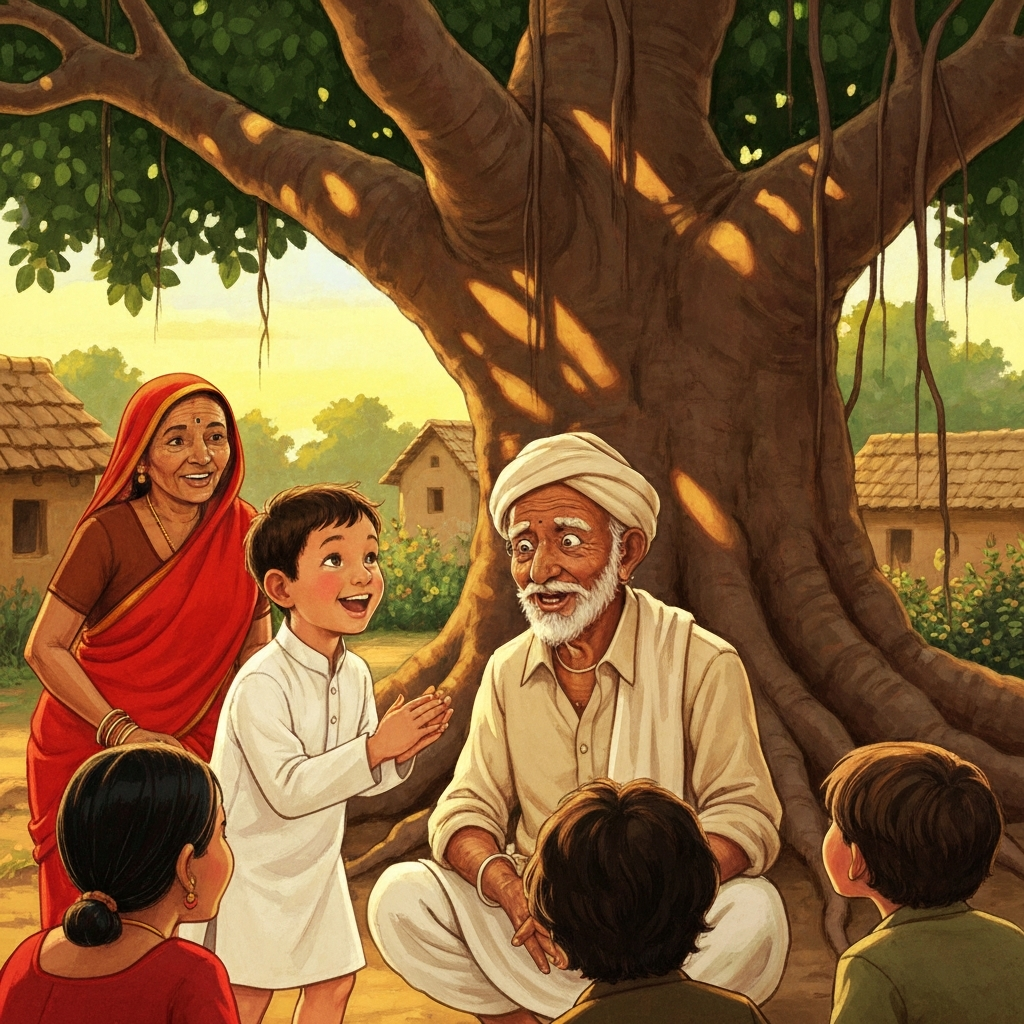
This theme explores the role of folk tales, storytelling, and language in cultural heritage and education.
150 voices speak to this
Positive
Overall Community Sentiment
AI-synthesised pieces woven from many community voices on this theme. They may contain errors or interpretation — they're a reflection of the stories, not a record of fact.
The knowledge of our spoken languages is passed down to the next generation.
— Devisingh Solanki · Alirajpur, Madhya Pradesh
For folk tales and to pass them on to the second generation
— Sunita Kumari · Ghorawal, Sonbhadra, Uttar Pradesh
For conveying folk tales to the next generation.
— Sunita Kumari · Ghorawal, Sonbhadra, Uttar Pradesh
It is very important to pass on our traditional knowledge from one generation to another, to tell our children.
— Chanda
Because for the knowledge of our tradition and culture to the next generation.
— अमर जीत · Ormaura, Sonbhadra, Uttar Pradesh
So that the next generation can know about our way of life.
— Sunita Kumari · Ghorawal, Sonbhadra, Uttar Pradesh
For us to pass on from this generation to the next.
— अमर जीत · Kon, Sonbhadra, Uttar Pradesh
To pass on the knowledge of one's past life to the next generation.
— Sunita Kumari · Ghorawal, Sonbhadra, Uttar Pradesh
So that our children also know what our culture is.
— अमर जीत · Kon, Sonbhadra, Uttar Pradesh
Traditional folk songs, dances, and stories are a good option to pass on to the next generation.
— Kachala Choudhary
So that the future generation can understand
— Sunita Kumari · Ghorawal, Sonbhadra, Uttar Pradesh
Songs, dances, and folk tales are important mediums for transferring traditional knowledge from one generation to another.
— AbhiLL Ipsa
We hope that our mother tongue will continue to be spoken by the next generation.
— AbhiLL Ipsa
We must inform the coming generations, our children, about our heritage and old traditions so that we do not abandon them.
— bachcha lal · Shahganj, Sonbhadra, Uttar Pradesh
To pass on knowledge from your past life to the next generation.
— Sunita Kumari · Ghorawal, Sonbhadra, Uttar Pradesh
Songs, dances, and folktales are important mediums for transferring traditional knowledge from one generation to another.
— AbhiLL Ipsa
Songs, dances, and folktales are important mediums for transferring traditional knowledge from one generation to another.
— Batakrushna Sahoo
If we want to preserve our language, tradition, dance, and songs, we must teach them to the next generation.
— Gitanjali Bhoi · Sundargarh, Odisha
And learn tribal knowledge so that this knowledge can be passed on to the next generations.
— Sunita Kumari · Ghorawal, Sonbhadra, Uttar Pradesh
Our native language can be spoken by the next generation if we preserve and promote these languages from now on and impart knowledge to the next generation.
— Sunil oraon · Ranchi, Jharkhand
We protect our culture so that we can tell the future generations.
— arun raja · Kon, Sonbhadra, Uttar Pradesh
Culture should be preserved so that the new generation can learn something.
— संगीता मीणा · Metali, Dungarpur, Rajasthan
We should preserve our culture to pass it from this generation to the next.
— अमर जीत · Kon, Sonbhadra, Uttar Pradesh
Songs, dances, stories, and knowledge are good mediums to transmit from one generation to another.
— Kachala Choudhary
It is our duty to pass on the knowledge of this generation, in addition to the knowledge of previous generations, in this manner.
— Devisingh Solanki · Alirajpur, Madhya Pradesh
Ancestral knowledge must definitely be passed on from one generation to another.
— gobardhan pangi
Songs, dances, and folktales are important mediums for transferring traditional knowledge from one generation to another. This should be preserved.
— sudhir gamanga · Kharlingi, Housingboard Colony, Rayagada
To convey what is happening in our society to the next generation.
— Sunita Kumari · Ghorawal, Sonbhadra, Uttar Pradesh
If we keep our culture and traditions alive, our next generation will be able to know our culture and traditions well.
— Upendra Kumar Mahananda
So that future generations can understand.
— Sunita Kumari · Ghorawal, Sonbhadra, Uttar Pradesh
If we protect and preserve our language tradition and use the language, then the next generation will also learn and use it.
— Gitanjali Bhoi · Sundargarh, Odisha
So that our cultural program can be seen and understood by our coming second generation.
— Sunita Kumari · Ghorawal, Sonbhadra, Uttar Pradesh
So that children in the future can see the work done in our culture.
— Sunita Kumari · Ghorawal, Sonbhadra, Uttar Pradesh
So that everyone in the future knows about the previous generation.
— Sunita Kumari · Ghorawal, Sonbhadra, Uttar Pradesh
So that the coming generation has knowledge about us.
— Sunita Kumari · Ghorawal, Sonbhadra, Uttar Pradesh
So that the future generation can know about our lifestyle.
— Sunita Kumari · Ghorawal, Sonbhadra, Uttar Pradesh
It is important to preserve our culture because our new generation will know about it.
— Pankajini Chhatria
We should preserve our culture because it is important to raise our next generation and for them to know.
— Pankajini Chhatria
Old sports traditions, tribal traditions, etc., should be preserved so that the coming generation can learn something.
— संगीता मीणा · Rohan Wara, Dungarpur, Rajasthan
It is absolutely necessary to pass on traditional traditions from one generation to another to preserve them.
— Ramadas Badanayak · Udulibeda, Malkangiri, Odisha