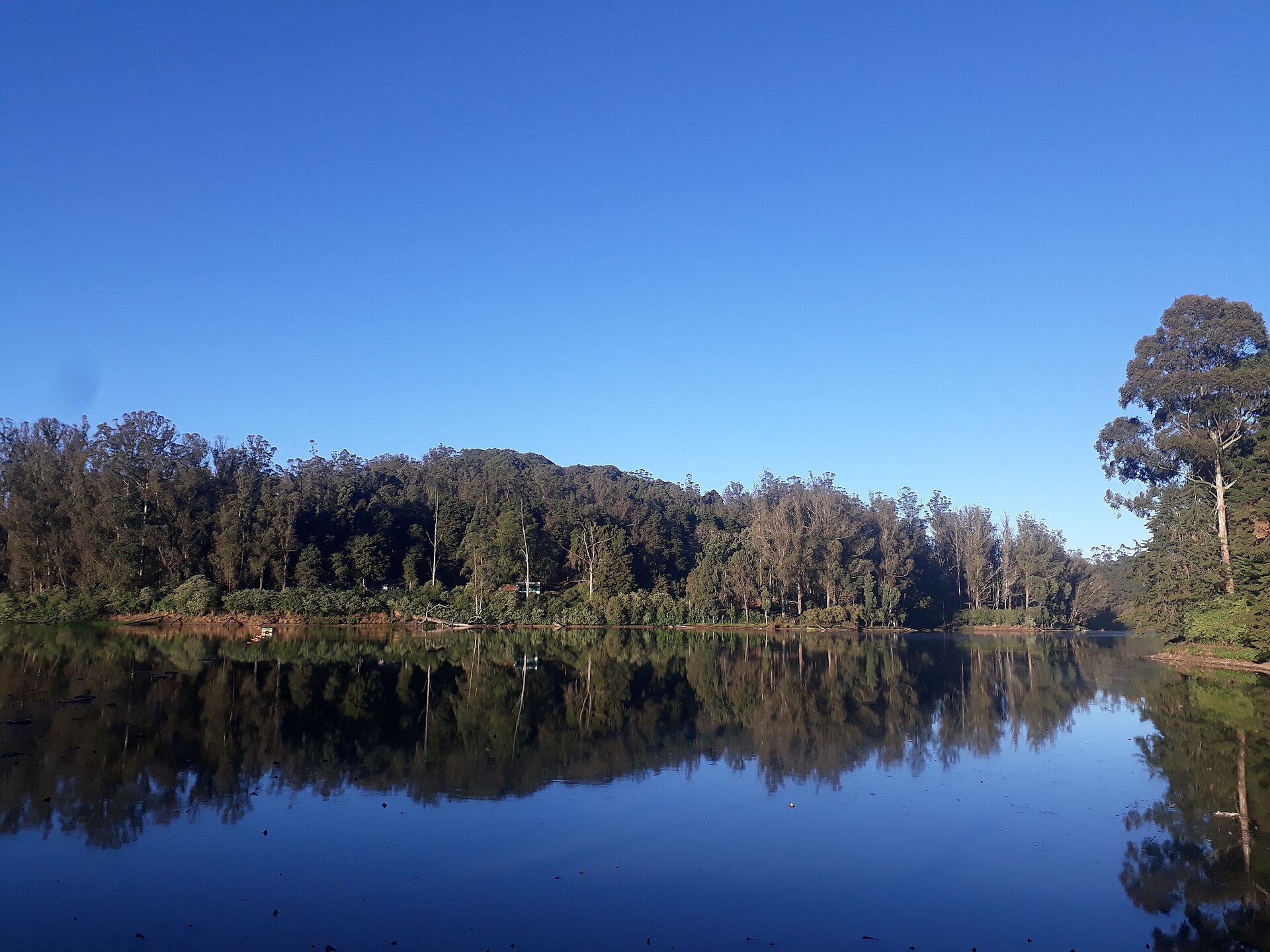
Ooty Lake's ecosystem is significantly threatened this month, primarily by widespread deforestation and persistent periods of poor air quality. While various local species, from birds to insects, are observed thriving in their niches, the lake expresses deep "ache" and "sorrow" over the diminishing forest cover and the "heavy" air, indicating a critical decline in its overall environmental health. The ongoing loss of its "green embrace" jeopardizes its long-term stability.
How the Month Unfolded
Early June saw fluctuating air quality, with some days experiencing "Unhealthy for Sensitive Groups" (AQI 149, PM2.5 149) and others "Good" (AQI 60, PM2.5 60, and AQI 48, PM2.5 48). Weather was cool, humid, with light winds and minimal rain. One distant fire (40.7 km) caused apprehension, but most fire reports confirmed no active fires within 50km. Deforestation alerts (396 in the last year, 216.8 ha since 2019) were a constant concern. Biodiversity reports for toads, tits, swallows, and Hoopoes were noted, with species expressing contentment. Mid-June continued with air quality concerns, with PM2.5 levels ranging from 44.8 to 169 µg/m³ and some AQI values high (e.g., 169). No active fires were reported within 50km. Weather was consistently cool, humid, with light winds and occasional light drizzle. Deforestation alerts remained a significant threat. Biodiversity observations for Callistethus regina beetles, Laughing Doves, House Crows, Sholakilis, Dusky Crag-Martins, Bonelli's Eagles, Impatiens plants, Sloth Bears, Black Eagles, and Pipits indicated active life. Late June showed severe air quality degradation on some days, with PM2.5 reaching 184.2 µg/m³ and AQI as high as 338 (Hazardous), though other reports indicated moderate or good air quality. Fire reports consistently showed no active fires within 50km. Weather continued to be cool, humid, and overcast, with increasing rainfall and drizzles towards the end of the month. Deforestation remained a critical, ongoing threat. Biodiversity observations for Painted Ladies, Fantails, Shikras, Peafowl, Common Sandpipers, Common Pigeons, Goshawks, Nilgiri Flycatchers, Indian Spot-billed Ducks, and Nuthatches reflected continued presence and activity.